Have consumers ever encountered the embarrassing situation of "the price tag indicating 10 yuan, but the cashier's settlement is 12 yuan" in front of supermarket shelves? In the fresh food section, is it common to see staff members holding a stack of paper price tags, replacing the discounted prices of near-expiration items one by one? These seemingly minor scenarios actually reflect the dual dilemma of "inefficient operation" and "resource waste" faced by the traditional retail industry. However, a thin electronic ink screen price tag (ESL) is reshaping the efficiency system and environmental logic of the retail industry, leveraging its core advantages of "low power consumption + digitalization".
1. Inefficiency and hidden costs of traditional price bidding.

On the eve of a large-scale promotional event, it takes 3 staff members working for 3 hours to complete the task of posting price tags throughout a 1000-square-meter store. When there is a need for temporary price adjustments (such as evening discount adjustments for fresh produce), the already posted price tags need to be removed one by one and re-posted, which directly leads to additional labor costs. Furthermore, the old price tags replaced after each price adjustment must be disposed of, unable to be recycled, resulting in resource waste and not aligning with the concept of green environmental protection.
There is a problem of price desynchronization between paper price tags and cash register systems. According to industry data, the average error rate of such price discrepancies is 3%-5%. Each occurrence of "price tag labeling inconsistent with settlement price" may not only result in the loss of one loyal customer, damaging customer loyalty, but also necessitate dealing with complaints from regulatory authorities, thereby increasing the operational risks and compliance costs of the enterprise. Traditional paper price tags have a single function, which can only present the price and basic name information of the product, making it difficult to carry richer associated information such as product traceability records, ingredient details, and origin descriptions. With the upgrading of consumer demand, this insufficient information carrying capacity has become increasingly difficult to meet modern consumers' deep right to know the information behind the product, especially their demand for querying key information such as the traceability path and composition of the product.
2. How electronic price tags reshape the retail industry
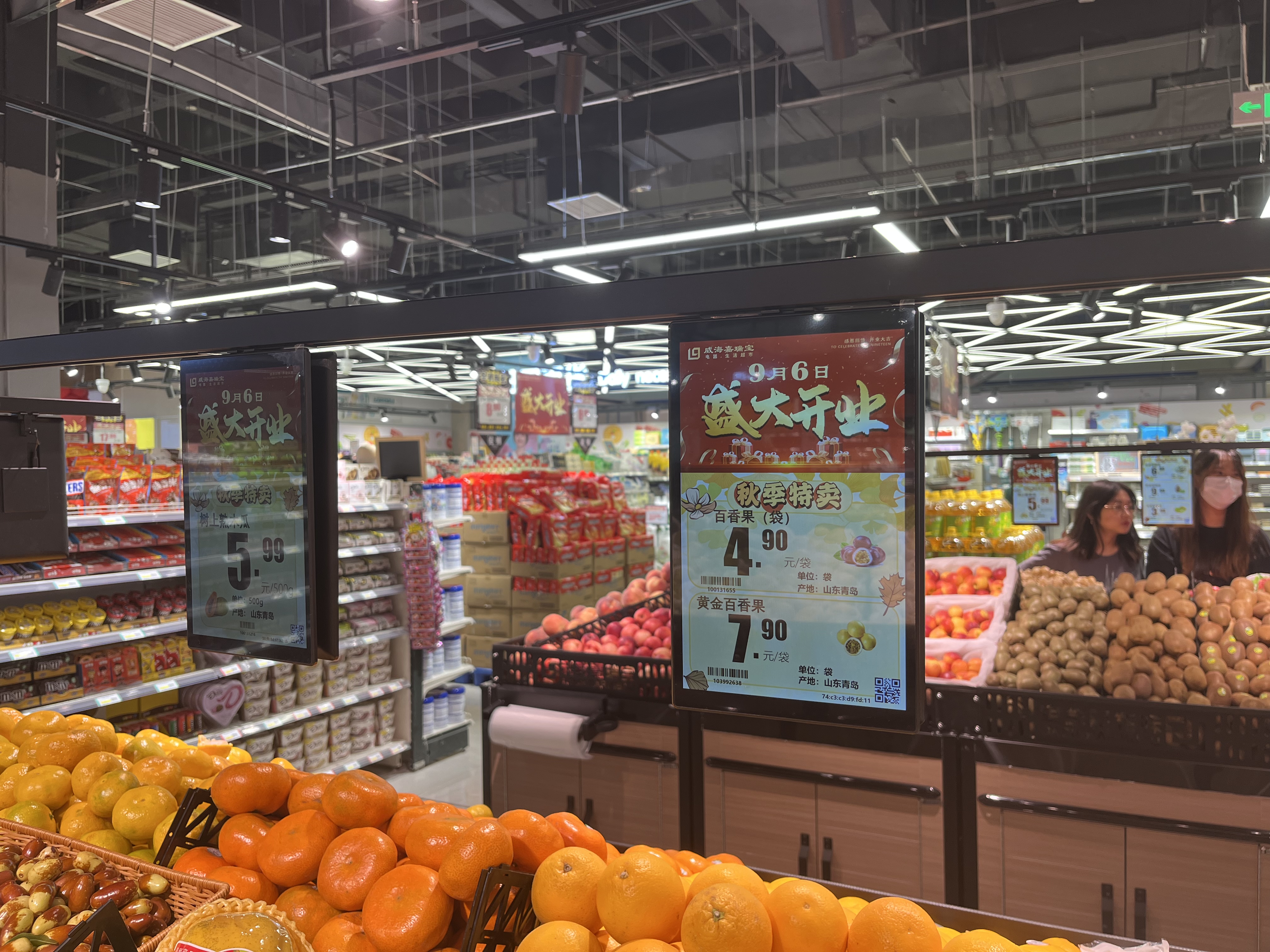
The most intuitive value of Electronic Shelf Label (ESL) lies in significantly enhancing operational efficiency in retail scenarios. Relying on the back-end management system, staff can initiate "one-click batch operations" to achieve synchronous updates of price tags across all stores - the time consumption of this process is directly compressed from the "hour-level" of traditional manual tagging and label changing to the "second-level", completely solving the inefficient pain point of manual price adjustment. Taking the pilot practice of a Yonghui Superstore store as an example, after introducing electronic price tags, a single store can save about 250 man-hours per year. This change not only reduces basic labor input but also frees employees from tedious and repetitive price change work, allowing them to shift to higher-value operational scenarios such as customer service optimization and fine management of the store, further improving the comprehensive service quality of the store.
Although the acquisition cost of a single electronic price tag is significantly higher than that of traditional paper labels, from a long-term application perspective, electronic price tags have outstanding economic advantages, specifically reflected in:
● a service life of up to 3-5 years, eliminating the need to bear consumable costs throughout the entire usage cycle;
● reducing label management labor costs by 80%, significantly reducing labor input;
● eliminating the need to pay for printing consumables, achieving zero printing consumable costs.
Taking the actual operational data of a community supermarket in Shanghai as an example: the supermarket previously spent about 8,000 yuan annually on paper price tag procurement and printing consumables; after introducing electronic price tags, although the initial investment was about 12,000 yuan, in the subsequent 5-year usage cycle, not only was there no need to procure paper price tags, but also by saving the labor hours of 2 employees for price tag posting (reducing labor costs by 4,000 yuan per month), the initial investment costs were recovered in just 2 years.
Electronic price tags break through the functional boundaries of traditional price tags, becoming an information hub that connects online and offline scenarios.
Their core value is reflected in three aspects:
● Multidimensional information transcends the dimension of information carrying, with electronic price tags upgrading from a single one-dimensional code to multidimensional information. Consumers can scan the one-dimensional code on the price tag to obtain real-time extended information such as product traceability, nutritional instructions, and usage guidance videos, breaking through the limitation of traditional price tags that only display prices.
● Precise marketing reaches the level of marketing implementation, with electronic price tags having the ability to synchronously display diverse price information, presenting promotional prices, member prices, and point deduction rules in real time, directly reaching target customers and helping enterprises achieve precise marketing and improve conversion efficiency.
● Dynamic inventory prompts supply chain collaboration dimensions, with electronic price tags interconnected with back-end inventory management systems, allowing for automatic updates of out-of-stock status and low inventory alerts. This not only reduces the cost of manual inventory verification but also accelerates the supply chain's response to market demand, optimizing inventory management efficiency. The environmental benefits of electronic price tags cannot be underestimated. A medium-sized retailer with 300 stores, after fully adopting electronic price tags, can reduce the use of approximately 120 million paper labels per year, equivalent to protecting 2,000 mature trees. This is the "green" aspect of electronic ink screen price tags.
3. Future Trend: Core Entry Point of Smart Retail
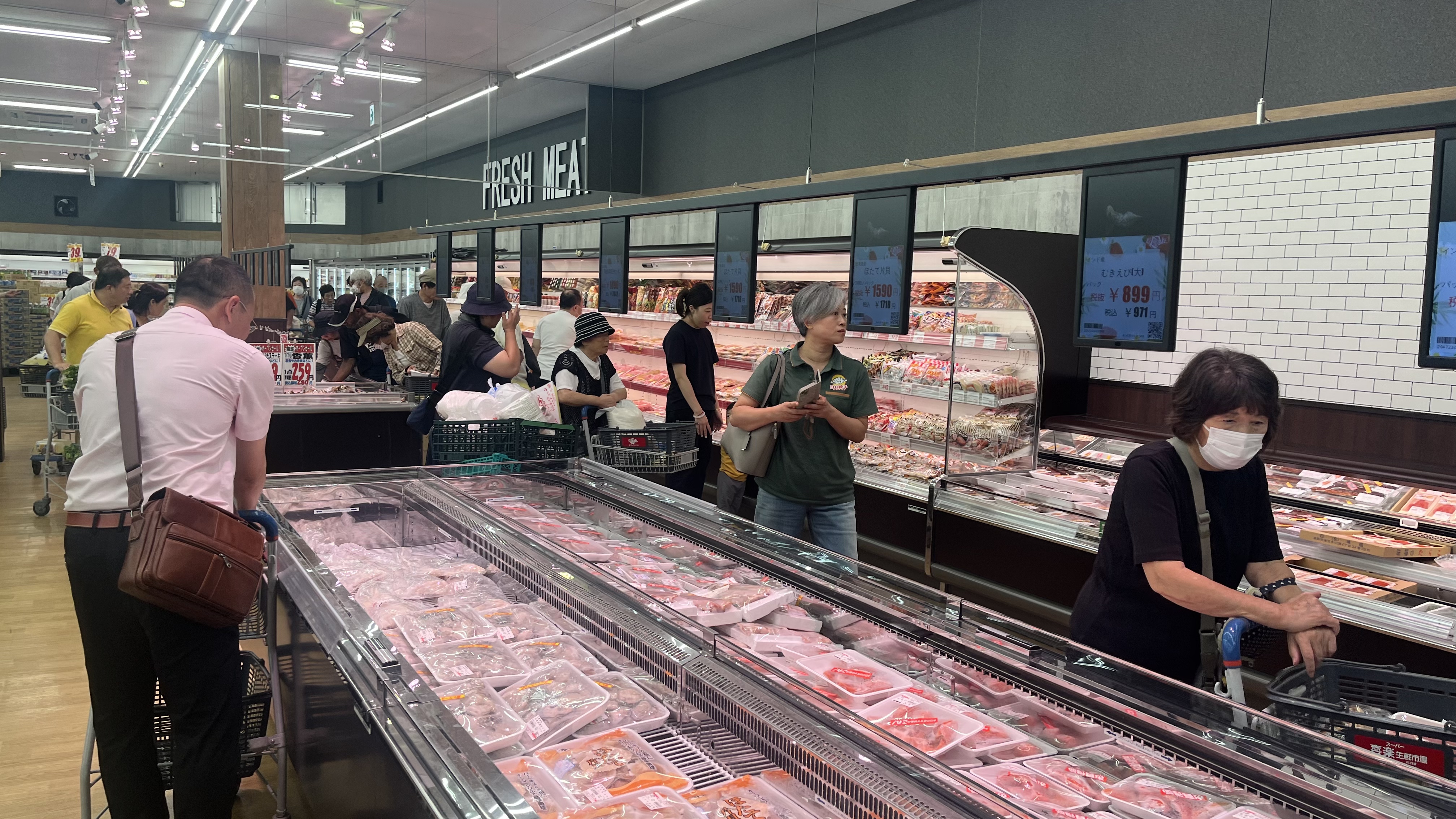
E Ink electronic price tags are not limited to the single function of "price tagging". They are also key access nodes in the intelligent retail system. In the future, these devices will be deeply integrated with technologies such as the Internet of Things (IoT), Artificial Intelligence (AI), Bluetooth Beacon, and Near Field Communication (NFC), thereby transforming every shelf unit into a data collection and interaction terminal. For retailers, this means:
● Smarter store operations;
● More precise promotion deployment;
● More efficient supply chain collaboration.
Summary:
The advent of e-paper electronic price tags represents not only an innovation in the form of price tags, but also a pivotal leap in the retail industry's transformation towards intelligence and sustainability. It not only drives the retail industry to achieve higher efficiency and precision in operations, but also enables more immediate interaction between brands and consumers.
United Intelligence will continue to empower the retail industry with innovative technologies, providing customers with smarter, more efficient, and more valuable electronic price tag solutions.


